
Where the work began
A client could ask what arrived, which devices powered on, how each unit was graded, what happened to the data, what value was recovered, and where every asset went. The answers lived in different records and with different people. I wanted one operating trail from the first pickup request to the final report.
How I worked
I started with customer interviews and the device work itself. I used Google Drive, Docs, Sheets, and Outlook to bring together pickup information, test records, pricing, customer questions, and developer decisions. ChatGPT and Claude helped me compare options and turn rough notes into workflows. Cursor helped me think through the database and each module in the admin and client portals. GitHub became the record for product changes, and I used n8n to map how information would move between intake, evidence, reporting, and the systems around them.
The model could draft the structure quickly. I supplied the field rules, decided what the first release needed, and checked each screen and workflow against how devices and records actually moved.
What I built
- Mapped the asset lifecycle from pickup through intake, testing, grading, disposition, and client reporting.
- Wrote procedures for device intake, testing, grading, data disposition records, evidence, and chain of custody.
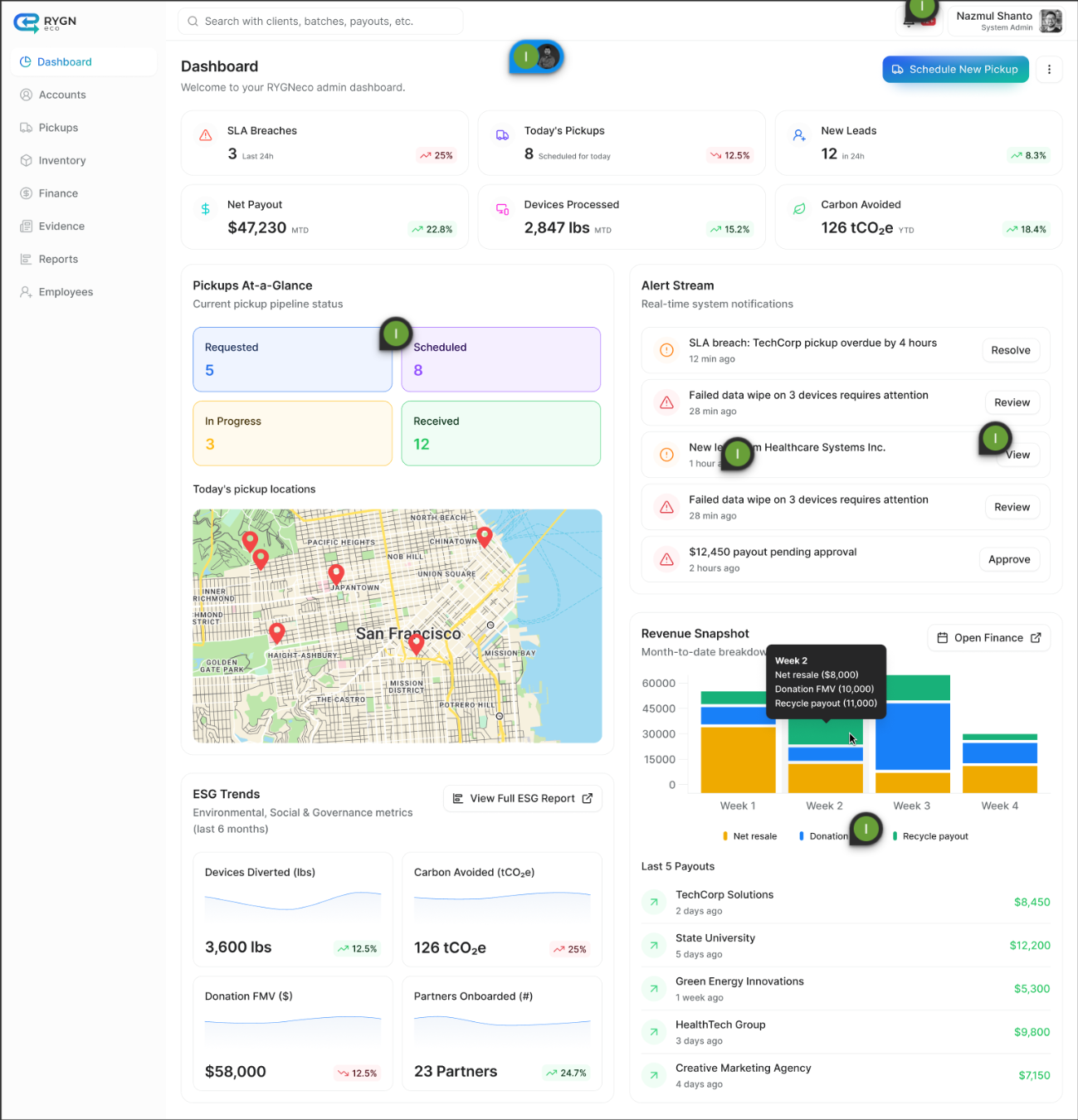
- Defined the accounts, pickups, inventory, evidence, finance, and reporting modules for the admin and client experience.
- Built a financial model with more than 40 variables covering labor, yield, cycle time, materials, resale value, and disposition choices.
- Planned the work of two developer interns, a development vendor, and an AWS adviser around the first product release.
- Drafted and negotiated the approximately $11,500 MVP contract, including milestones, acceptance criteria, warranty terms, and bug severity rules.
What came out of the work
The field program produced a verified 130 device test record for a healthcare pilot. The same work gave the development team a clear product map for intake, custody, testing, disposition, evidence, finance, and client reporting.
- 130
- Devices in the verified healthcare pilot test record
- 40+
- Variables in the financial model
- $11,500
- Approximate first product contract
- 6
- Core stages connected in the lifecycle workflow
From requirements to a working product view