

The problem
Financial reports showed losses after the fact, but managers did not have a clear operating mechanism for finding the source, assigning action, and checking whether the change held. Beverage variance, inventory discipline, overtime, product education, and upselling were related problems being managed separately.
My responsibility
I was accountable for operating performance across the three outlets. I needed to recover control without disrupting service, work within union and property requirements, and make the improved behavior repeatable for managers and frontline teams.
What I did
- Connected P&L, inventory, labor, overtime, and product-mix data in a regular operating review.
- Used issue ownership and corrective-action follow-up so each variance had a named owner and a next review date.
- Redesigned onboarding, coaching, product education, and certification around the behaviors behind the numbers.
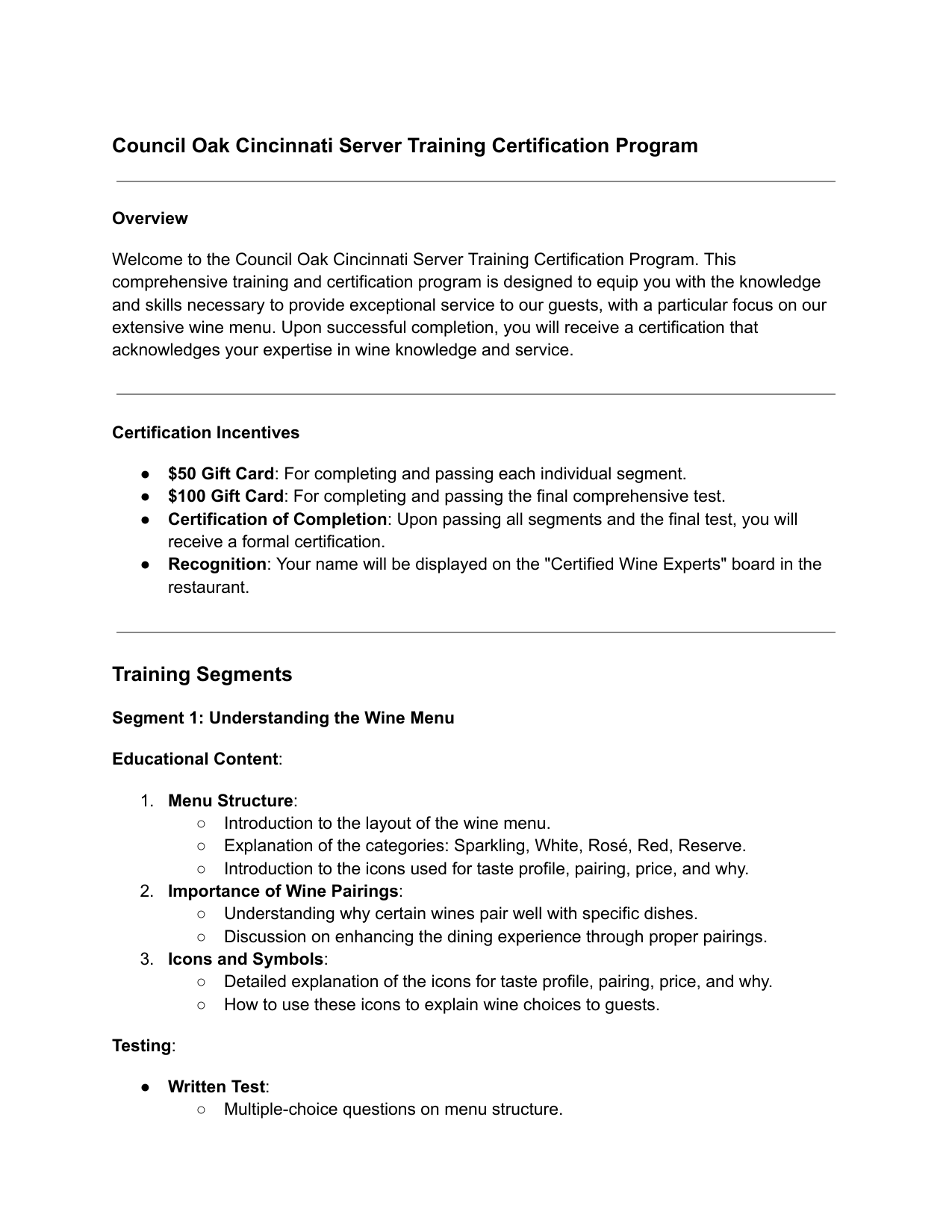
- Built a Wine and Whiskey Academy to improve product knowledge and give managers a concrete reinforcement tool.
- Worked across property leadership, finance, HR, labor relations, purchasing, security, vendors, and outlet managers.
Three decisions that shaped the work
Treat variance as an operating signal
Instead of reviewing the number alone, the team traced it to receiving, storage, pouring, recording, training, or manager follow-up.
Pair controls with capability
New routines were supported with onboarding, education, certification, and coaching so the change did not depend on enforcement alone.
Use a small set of visible measures
Inventory variance, labor, overtime, product mix, and upsell conversion gave managers a practical view of whether the system was working.
Result
The system recovered approximately $14,000 per month in beverage variance, held inventory variance below 1 percent, reduced labor cost 10 percent, and reduced overtime by 14 hours per week. Alcohol mix rose from 13 to 22 percent, and upsell conversion rose from 9 to 17 percent.
- Approximately $14,000
- Monthly variance recovered
- Below 1 percent
- Inventory variance maintained
- 10 percent
- Labor cost reduction
- 9 to 17 percent
- Upsell conversion
Evidence and limits
Internal financial reports, employee records, union matters, and property documents are confidential and are not published.